

Helping you do what you do, only better
Retailers generate data from dozens of sources—POS systems, ecommerce platforms, loyalty programs, supplier feeds, and syndicated market data—but most organizations can't access it all in one place. DSI brings that data together into a unified, trusted environment built on Microsoft Fabric, Power BI, Azure, and Copilot, so your teams can forecast inventory, understand customers, and make decisions with confidence.
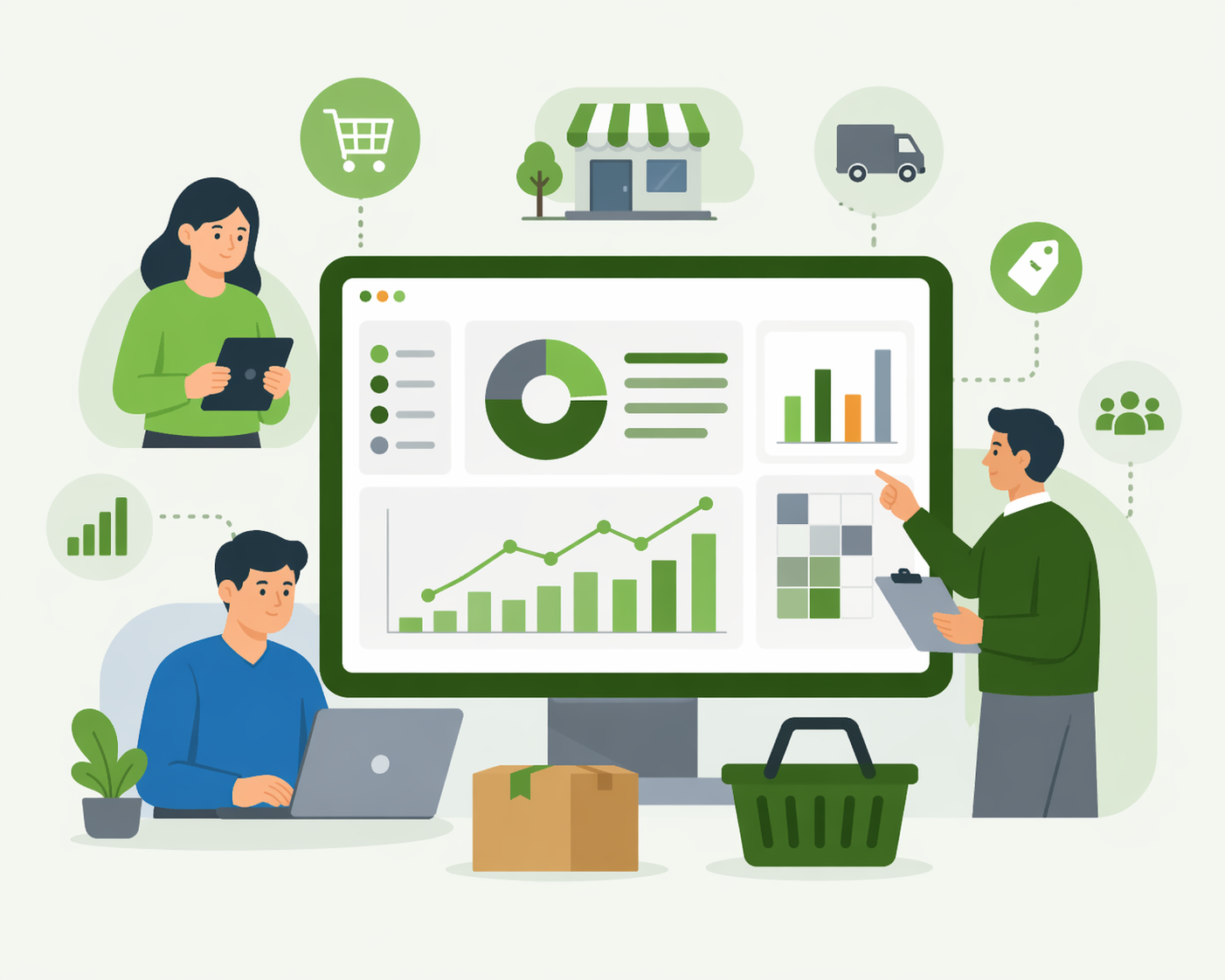
Retail Data Is Growing Faster Than Most Teams Can Manage
Retail data doesn't live in one place—it never has. POS platforms, ecommerce systems, loyalty programs, inventory management systems, supplier feeds, syndicated market data, and ERP platforms each generate a continuous stream of information.
The problem isn't volume. It's that most retail data integration environments keep that information locked in separate systems, making it nearly impossible to see the full picture at once.
- Disconnected Data: Critical information lives in separate systems across your organization. Merchandising sees one view. Finance sees another. Operations sees a third. No single team has the complete picture they need to act.
- Slow Reporting: When analysts spend the majority of their time extracting and combining data rather than analyzing it, reporting becomes a bottleneck—not a business tool. Decisions wait on data that should already be available.
- Limited Visibility: Without a unified data environment, decision-makers are working from incomplete information. Trends go undetected. Problems surface late. Opportunities move faster than the reports that would reveal them.
Most retailers don't need more data—they need better access to the data they already have.
Connecting Every Critical Retail Data Source
Effective retail data management starts with knowing exactly what you're working with. DSI integrates the full range of retail data sources—internal systems, partner feeds, and third-party market intelligence—into a single, accessible environment.
Here's what that looks like in practice.
Point-of-Sale Data
Store-level transaction data is the heartbeat of retail performance. DSI integrates POS data across locations, giving teams a consistent, real-time view of sales trends, basket behavior, and location-level performance.
Transactional retail sales data from stores and locations.
Ecommerce Platforms
Digital commerce generates its own stream of performance data—order volume, conversion rates, and channel contribution—that rarely speaks to in-store systems by default. DSI connects ecommerce data to the broader retail picture.
Online orders, conversions, and digital channel performance.
Loyalty Programs
Loyalty data reveals who your customers are and how they behave over time. DSI integrates engagement patterns, redemption activity, and retention signals into a unified customer view.
Customer engagement, retention, and purchase behavior.
Inventory Systems
Stock levels, replenishment cycles, and fulfillment performance are only useful when they're visible. DSI connects inventory systems to the broader data environment so teams can act on current stock realities rather than outdated reports.
Stock levels, replenishment, and fulfillment visibility.
Supplier & Vendor Data
Partner reporting, product movement data, and operational feeds from suppliers give retailers a more complete view of their supply chain. DSI integrates that data alongside internal systems for end-to-end visibility.
Supply chain and partner performance reporting.
Syndicated Market Data
Third-party market intelligence from providers like IRI, Nielsen, and Circana puts internal performance in context. DSI integrates syndicated market data so category and merchandising teams can benchmark against the market, not just themselves.
External market benchmarks and category intelligence.
ERP & Financial Systems
Revenue, profitability, and business performance data from ERP platforms belongs in the same environment as operational data. DSI connects financial systems so planning and reporting reflect the full business.
Revenue, profitability, and financial planning data.
Customer Service Platforms
Voice-of-customer data and service metrics tell a story that transactional data alone can't. DSI integrates customer service platforms to surface satisfaction signals alongside sales and operational performance.
Customer feedback, satisfaction, and support metrics.
Building a Trusted Retail Data Foundation
DSI's retail data integration framework follows a four-stage methodology designed to deliver a reliable, governed, and activated data environment—not just a connected one.
Discover
DSI assesses your existing systems, data sources, and business objectives to establish a clear starting point.
Map current-state data environments, identify gaps, and align integration efforts to measurable business outcomes.
Integrate
Connect internal and third-party retail data across POS, ecommerce, loyalty, ERP, supplier feeds, and syndicated sources.
Build a single, trusted retail data foundation on Microsoft's modern data and analytics stack.
Govern
Data quality, consistency, and accountability don't happen by accident. DSI embeds governance into the environment from day one.
Establish policies, standards, lineage, and controls using tools like Microsoft Purview to keep data trustworthy over time.
Activate
Deliver integrated data through analytics, dashboards, and AI-powered insights built on Power BI and Microsoft Copilot.
Turn trusted data into actionable intelligence so teams can spend less time searching for answers and more time acting on them.
Turning Retail Data Into Business Performance
Integrated data is only valuable when it changes how your business operates. Here's what that looks like across the teams that rely on it most.
Improve Inventory Planning
Retail inventory analytics connects inventory, supplier, and POS data so teams can see stock levels, replenishment timing, and demand trends in one place. Retailers reduce stockouts and excess inventory across locations by working from complete, trusted information.
Strengthen Forecasting
Retail forecasting analytics surfaces demand signals earlier by combining historical sales performance, syndicated market data, and seasonal trends. Teams gain more time to act and improve planning accuracy across the business.
Understand Customers Better
Retail customer analytics unifies loyalty data, ecommerce behavior, and customer service interactions into a complete customer view. Better visibility leads to stronger segmentation, more effective personalization, and improved customer experiences.
Optimize Pricing & Promotions
Integrated retail analytics solutions allow retailers to measure promotion effectiveness and pricing performance consistently across channels. Commercial teams gain the insight needed to protect margins and improve ROI.
Increase Operational Efficiency
Automated reporting and integrated data environments eliminate manual reconciliation and spreadsheet management. Analysts spend more time generating insights and less time preparing data.
Accelerate Decision-Making
Retail business intelligence dashboards provide executives and operations leaders with trusted performance data in real time. Decisions happen faster because teams no longer wait for reports to be built and distributed.
Built on Microsoft's Data and AI Ecosystem
DSI's retail data solutions are built on Microsoft's modern data stack—not because it's familiar territory, but because it's the right architectural foundation for retailers managing complex, multi-source environments.
This means your data environment is built to scale, govern, and activate intelligence, not just store information.
Microsoft Fabric
Microsoft Fabric retail deployments consolidate data engineering, analytics, and AI into a single, unified platform. Retailers work from one integrated environment, reducing complexity and accelerating time to insight.
Power BI
Power BI retail analytics delivers interactive dashboards and reporting that give teams visibility into performance at every level, from individual store results to enterprise-wide KPIs.
Azure
Azure provides scalable cloud infrastructure for large data volumes, complex integrations, and high-frequency updates without performance trade-offs as your data environment grows.
Microsoft Purview
Microsoft Purview helps ensure data across your environment is catalogued, classified, and managed consistently. DSI implements Purview to build accountability and data quality into the foundation.
Microsoft Copilot
Microsoft Copilot brings AI-powered, natural language querying to your retail data environment so teams can explore data, surface answers, and generate insights faster.
Implementation & Activation
DSI is not a reseller or licensing source. We are the partner that makes these tools work together in your specific retail environment.
Supporting Retail Teams Across the Enterprise
Retail data challenges look different depending on where you sit in the organization. Here's how integrated data changes what each team can see—and do.
A Strategic Partner for Retail Data Transformation
DSI helps retailers move from fragmented data systems to trusted, governed, and activated intelligence.
Our role is not just connecting tools. We bring the retail context, Microsoft expertise, governance discipline, and long-term delivery model needed to make data transformation work in the real world.
Retail Industry Experience
DSI understands the systems, processes, and performance drivers behind category planning, inventory management, omnichannel reporting, and retail operations.
Microsoft Expertise
Our specialization spans Microsoft Fabric, Power BI, Azure, Purview, and Copilot, helping retailers build reliable environments that are ready to scale.
Data Governance Leadership
Governance is built into DSI's methodology from the start, ensuring data quality, consistency, accountability, and trust across every integration.
End-to-End Delivery
DSI manages discovery, integration, governance, and activation so retailers do not need to coordinate multiple vendors or fragmented handoffs.
Analytics & AI Enablement
The environments we build support advanced analytics, AI-powered querying, and predictive modeling for more forward-looking retail intelligence.
Partnership Approach
DSI works alongside retail teams over time, refining integrations, expanding reporting, and building new capabilities as business needs evolve.
Retail Data Integration & Analytics
Unlock More Value From Your Retail Data
Managing data across multiple locations, sales channels, and supplier networks is genuinely complex—and most retail organizations are dealing with that complexity while still trying to run the business.
DSI helps retailers transform disconnected data into actionable retail business intelligence that supports better decisions across merchandising, operations, supply chain, marketing, finance, and executive leadership.
Schedule a Retail Data ConsultationFrequently Asked Questions
What is retail data integration?
Retail data integration is the process of connecting data from multiple retail systems—such as POS platforms, ecommerce sites, loyalty programs, inventory systems, and supplier feeds—into a single, unified environment. The goal is to give retail teams a complete, consistent view of business performance so they can make faster and more informed decisions.
Why is retail data integration important?
Most retail organizations operate with data spread across a dozen or more disconnected systems. Without integration, teams work from incomplete information, reporting is slow, and decisions are made on partial data. Integrated data enables consistent reporting, faster forecasting, and a complete view of operations across channels and locations.
How do retailers benefit from integrated data?
Retailers with integrated data environments can reduce stockouts, improve forecast accuracy, understand customers more completely, and accelerate decision-making at every level of the organization. The operational benefit is measurable: less time on manual data preparation, more time on the analysis that drives performance.
What retail systems can DSI connect?
DSI integrates a broad range of retail systems, including POS platforms, ecommerce systems, loyalty programs, inventory management systems, supplier and vendor feeds, ERP and financial platforms, syndicated market data sources, and customer service platforms. If a system generates data that matters to your business, DSI can work to integrate it.
Can DSI integrate third-party market data sources like Nielsen or Circana?
DSI integrates syndicated market data from providers including Nielsen, Circana, formerly IRI, and other market intelligence platforms. This allows category and merchandising teams to compare internal performance against market benchmarks—an analysis that's difficult or impossible when syndicated data lives outside the core data environment.
How does Microsoft Fabric support retail analytics?
Microsoft Fabric is a unified data platform that consolidates data engineering, analytics, and AI capabilities in a single environment. For retail organizations, this means data from POS, ecommerce, loyalty, and supplier systems can be ingested, transformed, and analyzed without moving between separate tools. DSI implements Microsoft Fabric retail environments configured for the specific data complexity retailers face.
What role does Power BI play in retail reporting?
Power BI serves as the reporting and visualization layer for retail data environments. DSI uses Power BI to build interactive dashboards that give merchandising, operations, finance, and executive teams real-time visibility into performance metrics at the store, region, category, and enterprise level. It turns integrated data into the retail reporting solutions teams can actually use day to day.
How can integrated data improve inventory planning?
When inventory data, supplier feeds, and POS sales data are connected in one environment, teams can see stock levels, replenishment cycles, and demand patterns together. That visibility makes it possible to identify potential stockouts before they happen and reduce excess inventory that ties up working capital. Integrated data replaces reactive inventory management with proactive planning.
What is retail data governance?
Retail data governance refers to the policies, standards, and controls that ensure data across a retail organization is accurate, consistent, and accountable. This includes defining how data is classified, who can access it, how quality is monitored, and how compliance requirements are met. DSI uses Microsoft Purview to build retail data governance frameworks that support trustworthy reporting and analytics from the ground up.
How can AI improve retail decision-making?
AI tools like Microsoft Copilot allow retail teams to query data in plain language, surface patterns, and generate insights without waiting for a report request to be fulfilled. When AI is layered onto a well-governed, integrated data environment, it can support demand forecasting, customer segmentation, and pricing analysis at a speed and scale that manual processes cannot match.


